
BARIUM5G
BARIUM5G
PROJECT DATA
Project Coordinator: Politecnico di Bari
Category: 5G, Artifical Intelligence, Informative systems
Location: Bari
Start: 06/2020 – End: 05/2023


Blockchain and ARtificial Intelligence for Ubiquitous coMputing via 5G – BARIUM5G
Emerging technologies support program of the investment plan for broadband diffusion – FSC 2014-2020 MISE – Public notice for the selection of projects for experimentation and applied research in the context of Axis II of the 5G emerging technologies support program – CUP D94I200000160002
PROJECT DATA
Project Coordinator: Politecnico di Bari
Category: 5G, Artifical Intelligence, Informative systems
Location: Bari
Start: 06/2020 – End: 05/2023
Blockchain and ARtificial Intelligence for Ubiquitous coMputing via 5G – BARIUM5G
Emerging technologies support program of the investment plan for broadband diffusion – FSC 2014-2020 MISE – Public notice for the selection of projects for experimentation and applied research in the context of Axis II of the 5G emerging technologies support program – CUP D94I200000160002
RESULTS

Experimental scenarios

Project total budget
OBJECTIVES

- efficient management of public lighting systems;
- Blockchain analysis and certification of data from vehicle fleets;
- traceability of the Blockchain-based production chain;
- last mile logistics based on AI and augmented reality techniques.

SOLUTIONS
MORE IN DEPTH
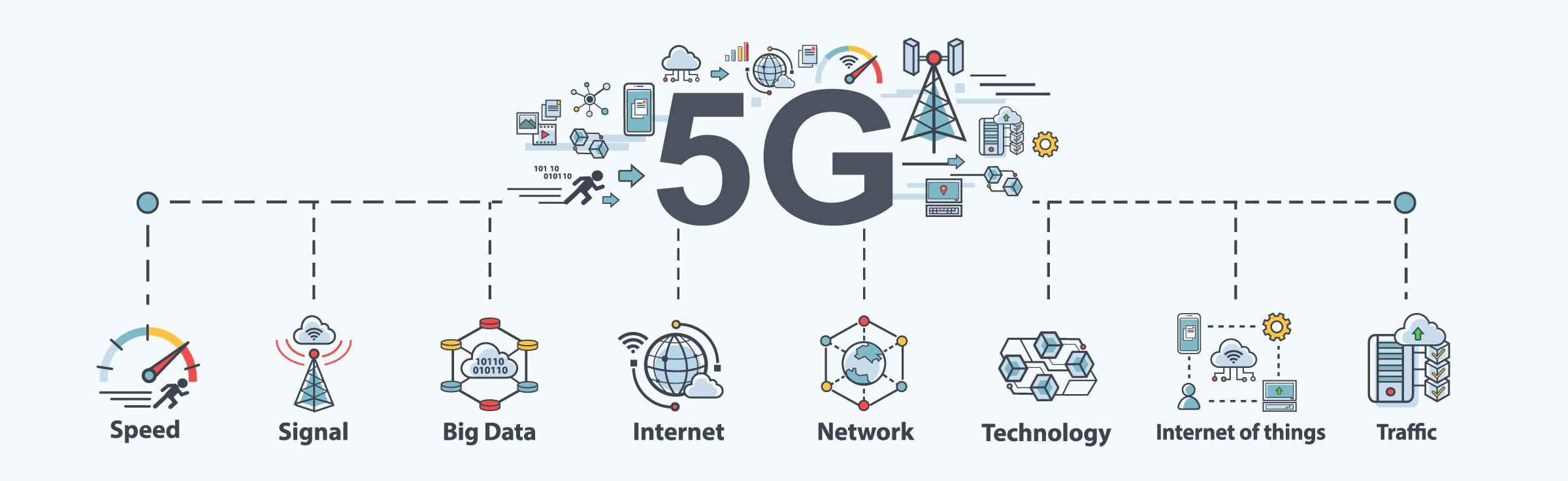
The project pays attention to the analysis and testing of innovative application methods and protocols for mobile scenarios based on the 5G infrastructure, in which smart devices connected to the network are able to communicate, share information and interact autonomously.
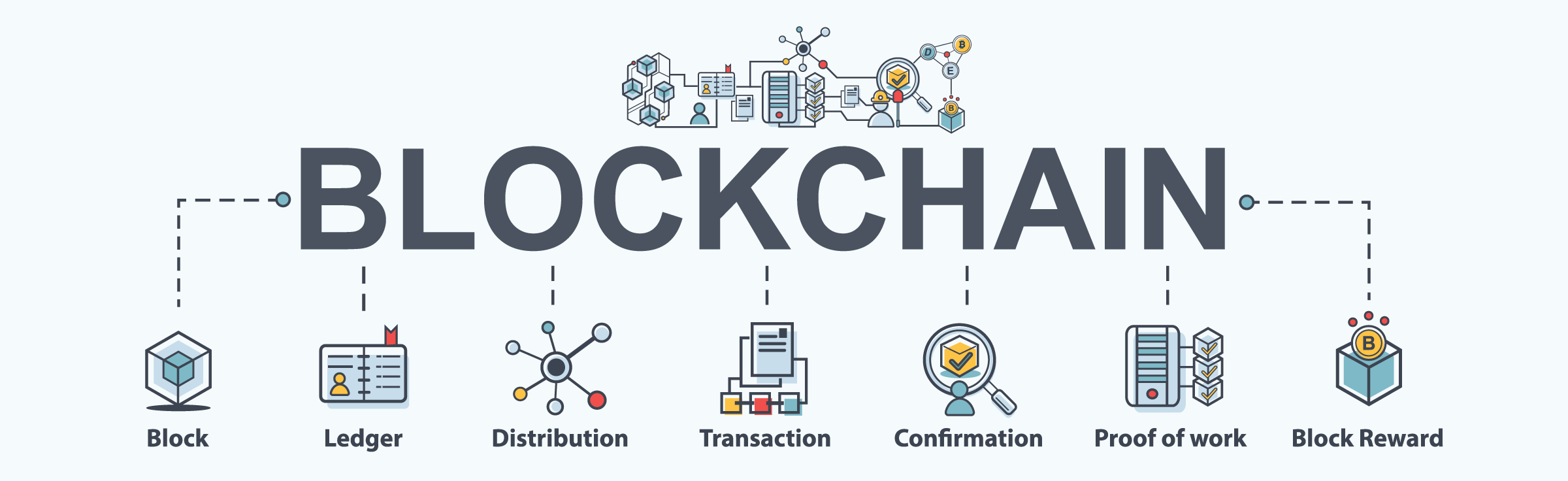
Blockchain technology enables a paradigm shift toward trustless cooperation: reliability derives from the fact that each transaction must be validated by a consensus of the majority of participating agents.
EXPERIMENTAL SCENARIO #1

Using an urban sensor network of Smart Lighting devices, it is possible to control the operation of the individual element of the public lighting system as well as to identify and prevent outages. Semantic-enhanced device/resource discovery will be adapted to reduce maintenance costs through intelligent techniques of predictive maintenance.
The expected impacts are:
- the minimization of recovery times in the event of a system failure;
- the reduction energy consumption and management costs of public lighting systems;
- the shrinking of the digital divide through real-time data sharing.
EXPERIMENTAL SCENARIO #2
This scenario aims to monitor vehicles in a commercial fleet by installing electronic devices collecting significant information to optimize the intermodal transport of goods and passengers. Gathered data will be stored in a blockchain-based distributed database and processed with data mining and machine learning techniques pattern detection and business decision support.
The expected impacts are:
- the certification and aggregation of heterogeneous information from vehicles and context;
- the improvement of the detection of models through data mining techniques;
- the optimization of vehicle fleet management and the support for business decisions.

EXPERIMENTAL SCENARIO #3

The aim of this scenario is to improve supply chain management and product traceability through a novel framework based on AI and blockchain technologies, characterized by automatic business rule execution and semantic-enhanced analytics. Applications on remote surgery, health and pharmacy sectors will be also considered.
The expected impacts are:
- the improvement of the traceability and the management of the supply chain;
- the increase in scalability of information systems for the supply chain;
- the maximization of customer satisfaction and products and processes safety specifically in the health sector.
EXPERIMENTAL SCENARIO #4
The growth of e-commerce is leading to the increase of costs of the so-called last-mile logistics (LML) and is making it harder to guarantee timely delivery for increasingly demanding customers. The goal is to enable a set of innovative capabilities, thanks to the annotation and processing of information in machine-understandable formats obtained by annotating low-level data collected in real time by devices and sensors in the LML network.
The expected impacts are:
- the optimization of the daily load assigned to each transporter;
- the improvement of optimal delivery routes planning according to traffic information and road network conditions;
- the improvement of user experience taking advantages from 5G networks to solve problems on-the-fly.
PUBLICATIONS, ARTICLES, AWARDS
G. Loseto, F. Scioscia, A. Pinto, F. Gramegna, S. Ieva, M. Ruta, E. Di Sciascio
BARIUM5G – Blockchain and Artificial Intelligence for Ubiquitous coMputing via 5G
6th Italian conference on ICT for smart cities and communities
SEPTEMBER, 2020
The project focuses on the analysis and testing of innovative application methodologies and protocols for mobility scenarios on fifth generation (5G) infrastructures.
STAKEHOLDERS & CREDITS

MSc with honors & PhD in Electrical Eng.
Politecnico di Bari (IT)
EU Marie Curie Fellow
Nottingham University (UK)
40+ international papers
30+ industrial and R&D projects

Senior Project Manager in Idea75.
MSc in Telecommunication Engineering
Politecnico di Bari
MSc in Economics and management
Università degli studi di Bari
MIT Professional Education, Master in ICT management
Università Milano Bicocca
12+ y of experience in ICT business

Politecnico di Bari is a public university with the aim of cultural, scientific and technological progress through research organization in science and technology of Architecture and Engineering fields.
www.poliba.it

The University of Bari “Aldo Moro” is one of the most important state universities in southern Italy with different faculties and research fields, particularly in the fields of information and computational technologies.
www.uniba.it

IVIS is an Italian company based in Taranto, pioneer in corneal surgical technologies since 1996. Today it offers advanced solutions for the surgical sector with increasing investments in innovation.
www.ivistechnologies.com
